Check Engine Light On? Here’s What to Do Next | Grote Automotive Service
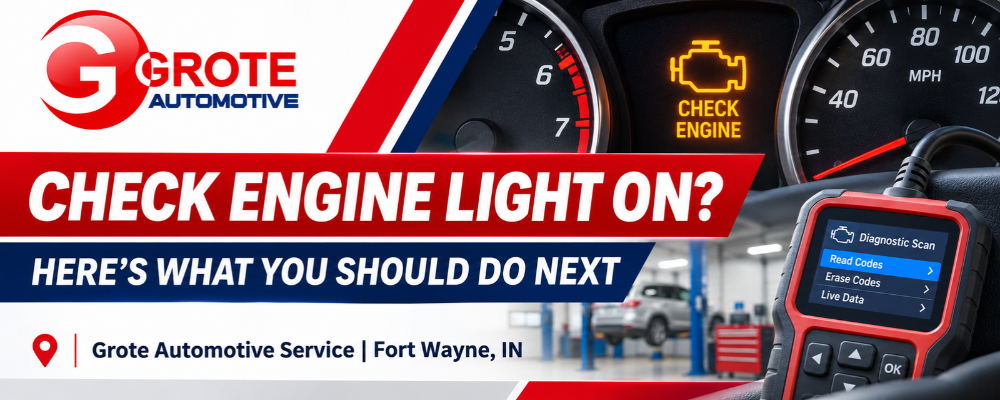
Check Engine Light On? Here’s What You Should Do Next
Your Guide to Check Engine Light Diagnostics and Auto Repair in Fort Wayne, Indiana
You’re driving down the road, enjoying your day, when suddenly you notice it. That little yellow or orange engine-shaped symbol glowing on your dashboard.
Your check engine light is on.
Now what?
Should you pull over immediately? Can you keep driving? Is something seriously wrong with your vehicle? And perhaps the biggest question of all: How much is this going to cost to fix?
First, don’t panic. A check engine light doesn’t automatically mean your engine is failing or that you’re facing an expensive repair. However, it does mean your vehicle is trying to tell you something important.
At Grote Automotive Service in Fort Wayne, Indiana, we understand how stressful unexpected vehicle problems can be. Our experienced technicians help drivers identify the causes of check engine lights, diagnose engine performance problems, and get their vehicles back on the road safely.
Whether your check engine light just appeared or has been glowing for several days, here’s what you need to know about what it means, what might be causing it, and what you should do next.
What Does It Mean When Your Check Engine Light Comes On?
Your vehicle contains an advanced onboard computer system that constantly monitors engine performance, emissions, fuel delivery, and other essential functions.
When that system detects something operating outside its expected parameters, it may activate your check engine light.
Also called the malfunction indicator lamp (MIL), the check engine light warns you that something within your vehicle’s monitored systems needs attention.
The problem could be relatively minor, such as a loose gas cap, or more significant, such as an engine misfire, failing sensor, or malfunctioning emissions component.
The important thing to understand is that the check engine light is a warning, not a diagnosis.
You cannot determine the exact problem simply by looking at the dashboard light. Your vehicle needs to be properly evaluated to identify what’s causing the warning.
That’s where professional check engine light diagnostics in Fort Wayne can make a difference.
Solid vs. Flashing Check Engine Light: Know the Difference
Not all check engine warnings indicate the same level of urgency.
Understanding the difference between a steady light and a flashing light can help you make a safer decision.
Solid Check Engine Light: Schedule an Inspection Soon
If your check engine light remains steadily illuminated, your vehicle’s computer has detected a problem that needs attention.
In some cases, you may be able to drive a short distance if your vehicle is otherwise operating normally.
However, a solid check engine light should never be ignored.
Possible causes include:
- Loose or damaged gas cap
- Faulty oxygen sensor
- Malfunctioning mass airflow sensor
- Emissions system problems
- Worn spark plugs
- Fuel delivery issues
While some of these problems may initially seem minor, delaying repairs could affect fuel efficiency, engine performance, and long-term vehicle reliability.
Our recommendation: If your check engine light is solid and your vehicle is running normally, avoid unnecessary driving and schedule a diagnostic appointment promptly.
Flashing Check Engine Light: Stop Driving Safely
A flashing check engine light is a much more serious warning.
In many vehicles, a flashing light indicates an active engine misfire severe enough to risk damaging the catalytic converter.
You might also experience shaking, hesitation, reduced power, or unusual engine sounds.
Continuing to drive under these conditions can cause substantial damage to expensive engine and emissions components.
If your check engine light starts flashing, safely pull over, shut off your engine, and arrange for roadside assistance or towing.
Do not assume the vehicle is safe simply because the warning light temporarily stops flashing.
Getting the problem professionally diagnosed is the safest way to determine what should happen next.
Check Engine Light On? Follow These 6 Steps
When your check engine light comes on, taking the right action early can help protect your vehicle and potentially prevent more expensive repairs.
Step 1: Pay Attention to How Your Vehicle Is Driving
Before doing anything else, notice whether your vehicle is behaving differently.
Ask yourself:
- Is the engine running rough or shaking?
- Does the vehicle hesitate when accelerating?
- Have you noticed a sudden loss of power?
- Is the engine making unfamiliar noises?
- Are there unusual smells coming from the vehicle?
- Is the temperature gauge reading higher than normal?
If your vehicle is running poorly, overheating, smoking, or showing other serious warning signs, safely stop driving and seek assistance.
If everything seems normal and the check engine light is solid, you may have time to arrange a professional inspection without an immediate roadside emergency.
Step 2: Check Your Gas Cap
Believe it or not, a loose gas cap can sometimes trigger your check engine light.
Your vehicle’s fuel system is designed to prevent gasoline vapors from escaping into the atmosphere. If the cap isn’t properly secured, the computer may detect an emissions-related problem.
Once you’ve safely parked and turned off the engine, check that your gas cap is tightened correctly.
If the gas cap caused the issue, your check engine light may turn off after several normal driving cycles.
However, if the light remains illuminated, don’t assume the gas cap is the only problem. A professional diagnostic inspection can help determine the actual cause.
Step 3: Avoid Hard Acceleration and Unnecessary Driving
If your check engine light is steadily illuminated and your vehicle otherwise seems to operate normally, avoid putting additional stress on the engine until it can be inspected.
That means avoiding aggressive acceleration, excessive engine speeds, heavy towing, and unnecessary long-distance trips.
This isn’t a substitute for repairs. It’s simply a precaution until a qualified technician can assess the situation.
A warning that seems minor today could develop into a more serious problem if ignored.
Step 4: Don’t Just Clear the Warning Code
Some drivers use inexpensive code readers or visit an auto parts store to have their check engine light scanned.
While an OBD-II scanner can provide valuable information, retrieving a trouble code doesn’t necessarily identify which part needs replacement.
For example, a code associated with an oxygen sensor could be caused by the sensor itself, an exhaust leak, a wiring problem, or another engine performance issue.
Simply erasing the code may temporarily turn off the dashboard warning, but it doesn’t fix the underlying problem.
It can also remove useful diagnostic information.
A proper diagnosis identifies why the warning appeared, rather than simply making the light disappear.
Step 5: Schedule a Professional Diagnostic Inspection
Modern vehicles rely on complex electronic systems, sensors, and computer-controlled components.
Professional engine diagnostics use specialized equipment and testing procedures to investigate the source of a problem.
At Grote Automotive Service, our ASE-certified technicians use advanced diagnostic technology to examine stored trouble codes, evaluate vehicle performance, and determine what repairs may be necessary.
Rather than guessing which component needs replacement, our team focuses on finding the underlying cause.
You can learn more about our check engine light diagnostic services and how we help Fort Wayne drivers make informed repair decisions.
Step 6: Address the Problem Before It Gets Worse
Once the problem has been identified, it’s important to understand the recommended repairs and their urgency.
Some issues may involve relatively straightforward maintenance or component replacement.
Others could require more extensive engine or emissions system repairs.
The key is acting before a manageable problem becomes a major expense.
Our goal at Grote Automotive Service is to provide clear explanations, honest recommendations, and quality workmanship so you can feel confident about your next steps.
7 Common Reasons Your Check Engine Light Might Be On
Wondering what actually causes that frustrating dashboard warning?
Here are seven common possibilities our technicians may investigate during an engine diagnostic inspection.
1. Loose or Faulty Gas Cap
A damaged, missing, or improperly secured gas cap can interfere with your vehicle’s evaporative emissions control system.
Although this is often a relatively simple issue to correct, the warning should still be evaluated if it doesn’t resolve.
2. Failing Oxygen Sensor
Your oxygen sensors help your vehicle’s computer monitor exhaust gases and adjust engine operation.
When a sensor isn’t functioning correctly, it can contribute to poor fuel economy, increased emissions, and reduced engine efficiency.
However, an oxygen-sensor-related trouble code doesn’t always mean the sensor itself needs replacement.
3. Worn Spark Plugs or Ignition Coils
Spark plugs and ignition coils play essential roles in the combustion process.
When these components wear out or malfunction, your engine may misfire, hesitate, idle roughly, or lose power.
An ongoing misfire can also damage your catalytic converter.
If ignition components are responsible, timely repairs may help avoid more serious problems.
4. Malfunctioning Mass Airflow Sensor
The mass airflow sensor measures how much air enters your engine.
Your vehicle uses this information to calculate the appropriate amount of fuel for efficient combustion.
When the sensor provides inaccurate readings, you may experience rough idling, hesitation, or reduced fuel economy.
5. Catalytic Converter Problems
Your catalytic converter helps reduce harmful emissions produced by your engine.
When it isn’t functioning efficiently, your vehicle’s computer may activate the check engine light.
Catalytic converter problems can be expensive, but an efficiency-related trouble code doesn’t necessarily mean the converter itself has failed.
Other issues, including engine misfires, exhaust leaks, and fuel mixture problems, can produce related warnings.
Accurate diagnostics are essential before replacing an expensive component.
6. Fuel System Problems
Your engine needs the correct mixture of fuel and air to operate efficiently.
Problems involving fuel injectors, fuel pressure, or related components can interfere with that balance.
Possible symptoms include difficult starting, reduced acceleration, rough running, and decreased fuel efficiency.
7. Evaporative Emissions System Leaks
Your evaporative emissions system, often called the EVAP system, helps control gasoline vapors.
Problems involving hoses, valves, seals, or other EVAP components may trigger your check engine light.
Some EVAP issues produce few noticeable driving symptoms, which is one reason a vehicle may seem to run perfectly despite an illuminated warning.
Can You Keep Driving With Your Check Engine Light On?
This is one of the most common questions drivers ask.
The short answer: Sometimes, but it depends on the warning and how your vehicle is operating.
If your check engine light is solid, your temperature gauge is normal, and your vehicle isn’t showing unusual symptoms, a short, cautious drive to a repair facility may be reasonable.
However, you should avoid continuing your normal driving routine for days or weeks without getting the problem evaluated.
If the warning light is flashing or your vehicle is experiencing shaking, smoke, overheating, severe power loss, or other abnormal symptoms, stop safely and arrange assistance.
Remember, a car that appears to drive normally can still have an underlying issue affecting emissions, fuel economy, or engine reliability.
When in doubt, contact a professional repair facility before continuing to drive.
Why Ignoring Your Check Engine Light Could Cost You More
It’s tempting to ignore an illuminated check engine light, especially when your vehicle seems to be driving normally.
But waiting can sometimes turn a relatively manageable issue into a more expensive repair.
For example, an engine misfire caused by a faulty ignition component may eventually damage the catalytic converter if the problem continues.
Other engine performance issues can contribute to increased fuel consumption, rough operation, or additional wear.
Addressing warning signs early offers several potential benefits:
- Helps prevent certain problems from becoming more serious
- Protects engine and emissions system components
- May improve fuel efficiency when the underlying issue is corrected
- Reduces the risk of unexpected breakdowns
- Helps maintain vehicle performance and reliability
- Gives you a clearer understanding of your vehicle’s condition
If your vehicle requires additional repairs, our engine repair services in Fort Wayne can help address a range of mechanical and performance-related concerns.
What Happens During a Check Engine Light Diagnostic at Grote Automotive Service?
When you visit Grote Automotive Service, our technicians work to identify what is actually causing the problem.
Every vehicle and situation is different, but the process may include several important steps.
First, we review the symptoms. We want to know when the check engine light appeared, whether it has been flashing, and if you’ve noticed any changes in how your vehicle drives.
Next, we retrieve diagnostic information. Using professional scanning equipment, we access stored trouble codes and other available vehicle computer data.
Then, we investigate the cause. Depending on the codes and symptoms, additional testing may be needed to evaluate sensors, ignition components, engine performance, electrical circuits, or emissions systems.
Finally, we explain our findings. Once the underlying issue has been identified, our team can discuss recommended repairs and help you understand your options.
Our priority is transparency. We want you to know what your vehicle needs and why, without unnecessary confusion or pressure.
How Regular Maintenance Helps Prevent Engine Problems
Not every check engine light can be prevented.
However, staying current with your manufacturer’s recommended maintenance schedule can reduce the likelihood of some engine performance problems and help identify developing concerns early.
Important maintenance items include:
- Regular oil and filter changes
- Spark plug replacement at recommended intervals
- Engine air filter inspections
- Cooling system maintenance
- Battery and charging system inspections
- Fuel system evaluations when symptoms warrant them
- Routine vehicle inspections
Fort Wayne’s changing seasons can also place additional demands on your vehicle.
Cold winter mornings, hot summer afternoons, and everyday commuting conditions make consistent maintenance especially valuable.
Our preventative maintenance services help drivers stay ahead of routine wear and keep their vehicles operating reliably throughout the year.
Why Choose Grote Automotive Service in Fort Wayne?
Finding a trustworthy auto repair shop shouldn’t be another stressful part of dealing with vehicle problems.
At Grote Automotive Service, we’re committed to helping Fort Wayne drivers get the quality service and straightforward answers they deserve.
Our service center offers:
ASE-Certified Technicians
Our experienced technicians have the training and knowledge to diagnose and repair a wide range of automotive problems.
Advanced Diagnostic Equipment
Modern vehicles require modern technology. We use professional diagnostic equipment to investigate problems accurately.
Service for All Makes and Models
Whether you drive a Chevrolet, Ford, Toyota, Honda, Jeep, Nissan, or another brand, our team works on cars, trucks, and SUVs from major manufacturers.
Honest Recommendations and Transparent Communication
We explain our findings and recommended repairs so you can make informed decisions about your vehicle.
Convenient Service Options
We offer appointment scheduling, walk-in service, shuttle transportation, and after-hours vehicle drop-off and pickup options. Same-day service may also be available, depending on the work required.
From a simple maintenance concern to a more complex engine problem, our goal is to make your service experience easier.
Explore our complete automotive repair services in Fort Wayne to see how we can help keep your vehicle running at its best.
Frequently Asked Questions About Check Engine Lights
What is the most common reason a check engine light comes on?
A check engine light can be triggered by many different issues, including a loose gas cap, faulty oxygen sensor, ignition system problem, EVAP system leak, or fuel delivery concern. The exact cause varies by vehicle, making professional diagnostic testing important.
Is it safe to drive with a solid check engine light?
A short drive to a repair shop may be reasonable if the light is solid and your vehicle is operating normally. However, you should arrange an inspection promptly. If the light flashes or the vehicle runs abnormally, stop driving safely and seek assistance.
What should I do if my check engine light is flashing?
Safely pull over, turn off your engine, and arrange for roadside assistance or towing. A flashing check engine light often indicates a serious misfire that could damage your catalytic converter.
Can a check engine light turn off by itself?
Yes. Sometimes a check engine light will turn off after the monitored condition returns to normal. For example, tightening a loose gas cap may resolve an EVAP-related warning after several driving cycles. However, stored diagnostic information may remain, and an intermittent problem can return.
How much does a check engine light diagnostic cost in Fort Wayne?
Diagnostic pricing depends on the vehicle and the complexity of the problem. A basic code scan differs from the additional testing that may be required to identify the actual cause. Contact Grote Automotive Service at (260) 236-5362 to discuss your vehicle’s symptoms and current diagnostic pricing.
Can a bad battery cause my check engine light to come on?
Yes. Low system voltage or electrical problems can sometimes cause control modules to detect faults and store diagnostic codes. However, a check engine light does not automatically mean the battery needs replacement.
Will disconnecting my battery reset the check engine light?
Disconnecting the battery may clear some diagnostic information on certain vehicles, but it won’t correct the underlying mechanical or electrical problem. It may also reset emissions readiness monitors and other settings. Proper diagnostics are a better approach.
Where can I get my check engine light checked in Fort Wayne?
Grote Automotive Service provides professional check engine light diagnostics at 1620 N Coliseum Blvd, Fort Wayne, IN 46805. Call (260) 236-5362 or visit GroteAutomotiveService.com to request an appointment.
Check Engine Light On? Let Grote Automotive Service Help!
Your check engine light is there for a reason.
Whether it’s something as simple as a loose gas cap or a more serious engine performance issue, identifying the cause early can help protect your vehicle, your safety, and your wallet.
You shouldn’t have to guess what’s wrong with your car or worry about replacing parts that might not solve the problem.
At Grote Automotive Service in Fort Wayne, our team is ready to help you find answers, understand your options, and get back on the road with confidence.
Don’t ignore that warning light. Get it checked before a small issue potentially becomes a bigger problem!
Schedule Your Check Engine Light Diagnostic Today
Grote Automotive Service
📞 (260) 236-5362
🌐 www.GroteAutomotiveService.com
Service Hours:
Monday & Friday: 8:00 AM – 5:00 PM
Tuesday – Thursday: 8:00 AM – 6:00 PM
Closed Saturday & Sunday
Learn More About Check Engine Light Diagnostics and Request Service Today!
Grote Automotive Service — All Makes. All Models. One Trusted Team.
